


Table of Contents
- Quick Summary
- Introduction
- What is Crowdfunding?
- Types Of Crowdfunding
- 2. Reward-Based Crowdfunding
- How Does Crowdfunding Work?
- Traditional Fundraising vs Online Crowdfunding
- Is Crowdfunding Legal in India?
- Tax Regulations for Crowdfunding in India
- Benefits of Crowdfunding for Donors
- Challenges of Online Crowdfunding/Fundraising
- Conclusion
Quick Summary
- What is crowdfunding? It is a method of raising funds online from a large number of people to support medical, personal, or social causes.
- It includes types like donation-based, reward-based, debt-based, and equity-based crowdfunding, each serving different needs.
- Crowdfunding is legal in India, with donation and reward-based models being the most commonly used and trusted.
- It offers benefits such as quick access to funds, wider reach, and no repayment burden, especially during emergencies.
- Successful crowdfunding requires a compelling story, consistent promotion, and choosing a reliable platform.
Introduction
Rising healthcare costs, limited insurance coverage, and unexpected emergencies often leave families in India searching for urgent financial support. In such situations, crowdfunding has emerged as a powerful way to raise funds quickly and reach a large number of people online. But what is crowdfunding, and how does it actually work?
Crowdfunding is a method of raising money through small contributions from many people via online platforms. In India, it is widely used for medical expenses, personal needs, education, and social causes, especially when traditional options fall short.
In this guide, you’ll learn how crowdfunding works in India, its types, legal aspects, and how to raise funds online safely.
Read More: Advantages and Disadvantages of Crowdfunding

What is Crowdfunding?

Crowdfunding is a method of raising money by collecting small contributions from a large number of people, typically through online platforms. It allows individuals, families, and organisations to raise funds quickly for various needs such as medical expenses, education, personal causes, or business ideas.
Unlike traditional funding methods like loans or insurance, crowdfunding does not always require repayment. Instead, people contribute voluntarily, often driven by empathy, social connection, or belief in a cause.
In India, crowdfunding/fundraising has become an important financial support system, especially for medical emergencies where timely access to funds can make a critical difference. Online crowdfunding platforms make it easier to share fundraising campaigns, reach a wider audience, and raise funds efficiently.
For example, a patient in India diagnosed with a rare condition like Spinal Muscular Atrophy (SMA). Their family can start an online fundraising campaign on a crowdfunding platform, sharing medical details and expenses. People across the country can contribute small amounts, helping raise funds for treatment quickly.
Quick Answer: What is crowdfunding?
Crowdfunding is a way to raise money by collecting small amounts from many people online, usually through platforms, for medical, personal, or social needs.
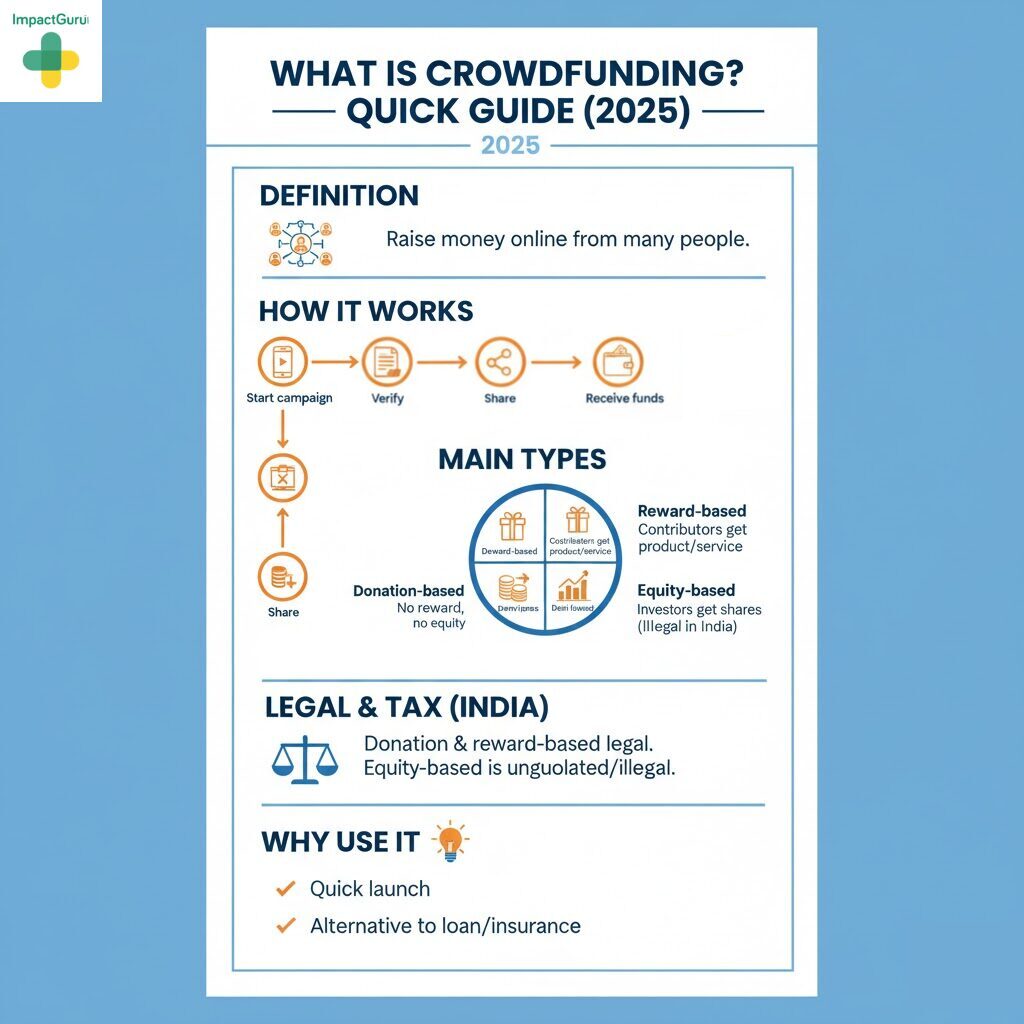
Types Of Crowdfunding
Crowdfunding can be broadly divided into different types based on how funds are raised and what contributors receive in return. Understanding these types of crowdfunding can help you choose the right approach based on your needs.
1. Donation-Based Crowdfunding
Donation-based is the simplest and most common form of crowdfunding, where individuals, NGOs, or organisations raise money online for a specific cause by collecting small contributions from a large number of people, without offering any financial return.
Unlike other types of crowdfunding, contributors do not receive equity, rewards, or repayments. Donations are made voluntarily, driven by goodwill and support for the cause.
Where is it Used in India?
In India, donation-based crowdfunding is widely used for:
- Medical emergencies
- Personal fundraising
- NGO and social causes
- Creative and community projects
It is especially popular for medical crowdfunding, where families raise funds for urgent treatments when other financial options are limited.
Key Use Cases of Donation-Based Crowdfunding
i. Medical Crowdfunding

Medical crowdfunding helps individuals raise funds for:
- Surgeries and hospital bills
- Cancer treatment and long-term illnesses
- Rare diseases such as Spinal Muscular Atrophy (SMA)
- Emergency care (accidents, heart attacks, critical conditions)
It plays a crucial role in India, where treatment costs can be high and immediate financial support is often needed.
ii. Crowdfunding for NGOs
India has over 31 lakh registered NGOs working across social, environmental, and healthcare sectors.
Crowdfunding enables NGOs to:
- Raise funds directly from supporters
- Expand their reach and impact
- Build long-term donor relationships
- Increase awareness for their cause
Online funding platforms make it easier for NGOs to connect with people who believe in their mission.
iii. Personal Fundraising
Personal fundraising allows individuals to raise money for causes close to them, such as:
- Education support
- Medical recovery
- Animal or pet care
- Memorial or emergency needs
It has become a trusted way to raise funds online quickly during difficult times.

iv. Creative Crowdfunding
It supports artists, creators, and communities in bringing ideas to life.
Common examples include:
- Films and documentaries
- Books and publishing projects
- Art exhibitions and installations
- Cultural events and workshops
- College or academic projects
This type helps creators build community support while funding their vision.
2. Reward-Based Crowdfunding
It is a type of online funding where individuals or businesses raise money in exchange for a product, service, or exclusive benefit.
Entrepreneurs share their idea and fundraising goal on a crowdfunding/fundraising platform, and contributors receive rewards as a token of appreciation.
Example
For instance, a fashion designer may offer exclusive designer wear to supporters, while a jewelry artist might send handcrafted pieces to those who contribute to the campaign.
Who is it Best For?
This type of crowdfunding is ideal for:
- Startups and small businesses
- Creators and artists
- Entrepreneurs launching new products
It helps them raise funds online while also building a loyal customer base.
Key Benefits
- Validates business ideas before launch
- Builds early community support
- Enables pre-orders and early traction
Platform Costs in India
Most fundraising platforms in India charge a platform fee (typically 5%–13%), along with payment processing or promotional costs, depending on the platform.
3) Equity-Based Crowdfunding
Equity-based crowdfunding allows investors to buy shares or equity in a company that is not listed on the stock market. In simple terms, contributors become partial owners of the business in exchange for their financial support.
If the company performs well, investors earn profits through dividends or appreciation in equity value. However, if the company fails or goes bankrupt, investors risk losing their investment.
How It Differs
- Reward-based → product/service
- Equity-based → ownership + financial returns
Risks Involved
- No guaranteed returns
- Risk of losing investment if the business fails
Types of Equity Crowdfunding
- Accredited crowdfunding – Limited to high-net-worth investors
- Open-access crowdfunding – Open to the public (restricted in India)
Regulation in India
Equity crowdfunding is currently restricted in India under regulatory guidelines, which is why most campaigns focus on donation or reward-based models.
4) Debt-Based Crowdfunding
Also known as loan-based crowdfunding, this model connects borrowers directly with lenders (investors) through an online platform. The borrower promises to repay the principal amount with interest over an agreed period.
This method removes traditional bank intermediaries, making the process faster, more cost-effective, and transparent. It also benefits lenders by offering better interest rates compared to conventional investment options.
Types of Debt-Based Crowdfunding
i. Peer-to-Peer (P2P) Lending
Individuals lend money directly to borrowers. Interest rates depend on the borrower’s credit profile.
ii. Microlending
Focused on social impact, this model supports small businesses, NGOs, or underserved communities with smaller loan amounts.
Why It’s Used
- Faster than traditional bank loans
- More accessible funding
- Transparent process
Quick Answer: What are the types of crowdfunding?
The main types of crowdfunding are donation-based, reward-based, debt-based, and equity-based, each with different purposes and returns for contributors.
How Does Crowdfunding Work?
Crowdfunding works by allowing individuals, families, or organisations to raise money online by sharing their story with a large number of people and collecting small contributions through a platform.
Step-by-Step Process
1. Create a Fundraising Campaign
Start by choosing a reliable crowdfunding platform and creating your campaign. You need to provide details such as:
- Purpose of fundraising
- Target amount
- Supporting documents (medical reports, cost estimates, etc.)
2. Share Your Story
Explain your situation clearly and honestly. A strong, emotional, and transparent story helps people understand your need and builds trust with potential donors.
3. Publish and Share the Campaign
Once your campaign is live, share it across:
- Social media platforms
- Email and personal networks
The more people see your campaign, the higher your chances of raising funds quickly.
4. Receive Donations Online
People who resonate with your cause can contribute any amount through secure online payment methods. Even small donations from many people can help you reach your goal.
5. Withdraw Funds
As donations come in, funds can be withdrawn (depending on platform policies) and used for the intended purpose, such as medical treatment, education, or emergencies.
What Makes a Crowdfunding Campaign Successful?
A successful crowdfunding campaign usually includes:
- A clear and genuine story
- Verified documents (especially for medical treatment)
- Regular updates to donors
- Active sharing across networks
How Crowdfunding Works in India?
In India, crowdfunding platforms help individuals raise funds online for medical emergencies, personal needs, and social causes. Most platforms provide:
- Campaign verification
- Secure payment gateways
- Support for sharing and promotion
Quick Answer: How does crowdfunding work?
Crowdfunding works by creating an online campaign, sharing your story, and collecting small donations from a large number of people through a crowdfunding/fundraising platform.
Traditional Fundraising vs Online Crowdfunding
Today, individuals, NGOs, and organisations in India can raise funds through traditional offline methods or modern online platforms. While both approaches aim to collect donations, online has made the process faster, more accessible, and scalable.
Key Differences Between Traditional Fundraising and Online Crowdfunding
| Feature | Traditional Fundraising | Online Crowdfunding |
| Method | Offline events, charity drives | Digital campaigns on crowdfunding platforms |
| Reach | Limited to local networks | Nationwide and global reach |
| Speed | Time-consuming planning | Faster campaign setup and fund collection |
| Cost | High (venue, logistics, marketing) | Low to start (Platform-based fees) |
| Accessibility | Requires physical presence | Accessible anytime, anywhere |
| Transparency | Limited tracking | Real-time updates and tracking |
Is Crowdfunding Legal in India?
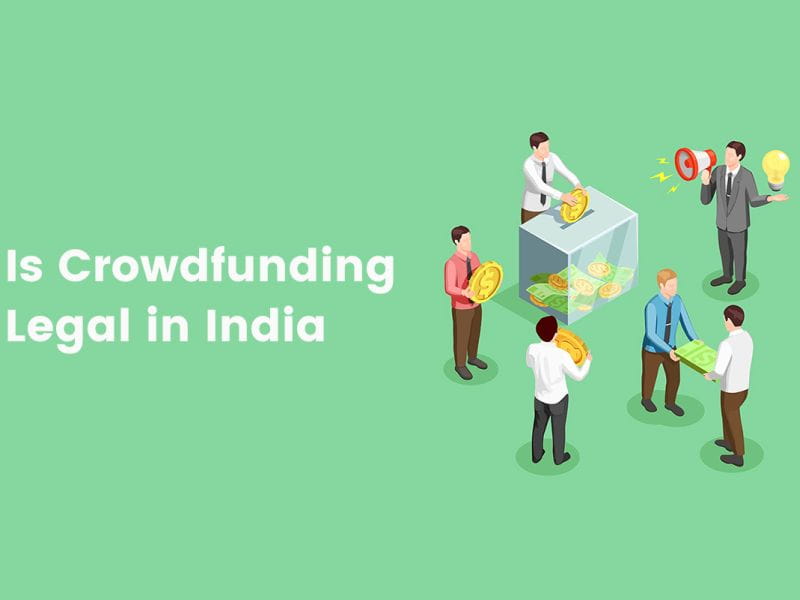
Yes, crowdfunding is legal in India, but its legality depends on which of its types is being used and the regulations governing it.
Online crowdfunding platforms in India provide a secure and transparent way to raise funds for medical, personal, and social causes, especially through donation-based and reward-based models.
Let’s study the legal implications for all these types of crowdfunding models separately.
| Type Of Crowdfunding | Its Work | Regulated By | Legal Status In India |
| Donation-based | Donations made without expecting anything in return | Information Technology Act (2000) and Income Tax Regulations | Legal |
| Reward-based | A contribution made with the intent of receiving tangible benefits | Absence of any legal regulation | Legal |
| Debt-based | An intermediary gives secured loans to the borrower to receive interest on the loan | Reserve Bank Of India | Legal |
| Equity-based | Companies offer equity in their business | Securities and Exchange Board of India (SEBI) | Illegal |
Regulatory Overview in India
The Securities and Exchange Board of India (SEBI) has clarified that equity-based crowdfunding is not permitted through digital platforms due to regulatory concerns.
However:
- Donation-based crowdfunding → fully legal and widely used
- Reward-based crowdfunding → legal but not specifically regulated
- Debt-based crowdfunding → regulated by RBI under P2P lending norms
This is why most fundraising platforms in India focus on donation and reward-based campaigns.
Legal implications for crowdfunding in Section 66A of the Information Technology Act,2000
| As per the IT Act, any individual starting a fundraiser or people on the fundraising platform cannot upload or include any graphics or content that involves vulgar, offensive, obscene, or inciting hatred in any way. It also includes: • Charges for misrepresentation • Disclosure for a fraudulent reason • Breaching someone’s privacy and confidentiality |
Quick Answer: Yes, crowdfunding is legal in India. Donation-based and reward-based crowdfunding are widely used, while debt-based is regulated by the RBI, and equity based is restricted.
Tax Regulations for Crowdfunding in India
Crowdfunding in India is subject to tax regulations depending on the nature of funds received and the type of campaign.
- For NGOs:
Registered non-profit organisations raising funds through crowdfunding may be eligible for tax exemptions, depending on their compliance with applicable laws. - For Individuals:
Funds received for personal causes such as medical expenses or education may be taxable, based on the nature of the transaction and applicable income tax rules. - For Donors:
Donations made to eligible NGOs can qualify for tax deductions under Section 80G of the Income Tax Act. However, cash donations above ₹2,000 are not eligible for deductions, encouraging digital contributions.
Understanding these tax implications helps both campaigners and donors make informed and compliant decisions while participating in fundraising.
Benefits of Crowdfunding for Donors
1. A Better Alternative to Bank Loans
In the past, people relied on bank loans to purchase a car, fund higher education, or cover medical emergencies. But traditional loans often involve lengthy paperwork, high interest rates, and long repayment periods.
In contrast, online crowdfunding provides a faster, simpler, and interest-free alternative for individuals and organizations seeking urgent financial help. It’s a modern solution for those who want to avoid the burden of EMIs while still getting the funds they need.
2. Quick Fund Disbursal
Speed matters during emergencies. In medical crowdfunding or personal fundraisers, instant access to funds can make all the difference. Unlike traditional financing, fundraising platforms enable campaigners to withdraw funds anytime during the campaign after a quick approval process, ensuring faster relief and less waiting time.
3. Minimum Cost, Maximum Reach
Traditional fundraising often involves high promotional expenses, from events to physical marketing. With online fundraising platforms, these costs drop dramatically. Using social media and email marketing, a campaign can reach thousands of potential donors at a fraction of the cost, improving both visibility and efficiency.
4. Unmatched Convenience
Starting a fundraiser online is simple; anyone can do it from anywhere, at any time. No need for face-to-face meetings or printed campaigns. Through fundraising websites and mobile apps, campaigners can easily manage, update, and track their campaigns on the go, while social media integration helps reach wider audiences in minutes.
5. Variety of Platforms to Choose From
As digital adoption grows, India has seen a rise in specialized crowdfunding platforms tailored for different causes, such as medical, NGO, educational, creative, or social. This variety ensures campaigners can choose the platform that best fits their goals and audience.
6. Additional Benefits for Campaigners
- Free and easy campaign setup – most platforms allow quick registration and setup.
- Expert guidance and customer support from platform professionals.
- Transparent tracking of donations and withdrawals.
Benefits to the Donors
1. Emotional Satisfaction
Donating through a crowdfunding platform offers deep emotional fulfillment. Knowing your contribution can save a life, educate a child, or support a family creates a genuine sense of purpose. Psychologically, acts of giving release endorphins and dopamine, boosting happiness and self-esteem.
2. Tax Benefits Under Section 80G
In India, donors can also enjoy tax deductions under Section 80G of the Income Tax Act, 1961 by donating to registered charitable institutions. Eligible contributors, whether individuals, firms, or taxpayers, can claim 50% or 100% deductions, depending on the NGO’s certification.
Note: To claim this benefit, donations must be made through cheque, draft, or digital payments. Not all contributions qualify for the 80G exemption, so verify the NGO’s registration before donating.
3. Improved Financial Awareness
Regular charitable giving encourages better personal money management. By allocating a small monthly donation budget, donors naturally develop discipline and awareness around saving, spending, and giving.
4. Inspiring Generosity in Children and Communities
When children observe their parents donating, they develop an early sense of empathy and social responsibility. Similarly, friends and relatives may feel motivated to contribute when they see your commitment to giving back, creating a ripple effect of kindness.
5. Support Without Time Constraints
Even if you can’t volunteer physically, donating money online is a powerful way to help. Every small contribution plays a part in improving someone’s life, proving that generosity isn’t limited by time, only by intent.
Challenges of Online Crowdfunding/Fundraising

While crowdfunding offers many advantages, it also comes with certain challenges that campaigners should be aware of.
- Need for consistent promotion: Campaigns require regular sharing across social media and networks to maintain visibility.
- Building trust with donors: A clear, honest, and well-documented campaign is essential to gain donor confidence.
- Donation fluctuations: Many campaigns experience a drop in contributions after the initial phase.
- Reaching new audiences: Expanding beyond personal networks can require time and strategy.
- Emotional hesitation: Asking for financial help, especially for personal causes, can be difficult for many individuals.
Choosing a reliable fundraising platform can help overcome these challenges by providing guidance, tools, and support throughout the fundraising journey.
Platforms like ImpactGuru simplify the entire process, helping you tell your story better, reach more donors, and raise funds quickly for personal, medical, or social causes.
Conclusion

| “Make Healthcare Affordable To Save Lives Today While Securing Families For A Better Tomorrow” |
Crowdfunding in India has become a powerful and accessible way to raise funds for medical emergencies, personal needs, and social causes. With rising healthcare costs and limited financial support options, online crowdfunding platforms are helping individuals and families get timely assistance when it matters most.
From understanding what it means to exploring its types, legal status, benefits, and challenges, this guide highlights how online fundraising works and why it is increasingly trusted across India.
Platforms like ImpactGuru make the process simpler by offering secure transactions, campaign support, and a wide reach, helping people raise funds quickly and efficiently.
If you are facing a financial challenge or want to support a meaningful cause, starting or contributing to a fundraising campaign can make a real difference.